

Welcome to the first Plain English Club newsletter of the year, which comes to you via the daft laptop of me, Iain Broome.
I have some news to share. Two pieces of news actually.
First, if all goes to plan, the next time you hear from me it will be to tell you that the companion website to this newsletter has become a blog. And no ordinary blog, because it will contain original posts alongside what I think we still call link posts.
Basically, if you enjoy the format of this newsletter – links to great content about content with some commentary and context from me – then you will also enjoy the blog. I'll explain more when it's all live.
Second update for you: another name change. On LinkedIn, I asked folk to help me choose a name for the site when it becomes a blog and a newsletter. The responses were super helpful. Feel free to go and add your own thoughts too.
But the current plan is to switch from Plain English Club to Clear Language Club. There are a few reasons, but the important ones will become clear (clear!) if you read the first article in the list of links below.
That's it for now. Thanks for subscribing. More soon.
Iain
Why plain language and Plain English are different
I did not know a lot of the history outlined in this post by Caroline Jarrett until she kindly pointed me to it last year. Historical drama aside, I think the key distinction for me is the importance of testing content with users.
Plain language relies on testing with users. If the intended users can use the content to do what they need to do, it’s plain. If they can’t, it’s not plain. So you can only really know whether you have succeeded in writing in plain language when you have tested with the actual users.
And of course, this detail is fundamental to content design as a discipline. It's about following the principles of clear writing, but making decisions based on research and data. You need to understand what users need before you start writing. Then you need to test your content when you're done to make sure it meets those needs. It's only plain or clear if it does.
User research with disabled people and their families
This is a brilliant piece of work by the team at Scope. And of course, almost all of this guidance can be put into action for any user research, not just when its done specifically with disabled people and their families.
I recommend you first read these recommendations by Ema Thornhill, which provide a good introduction to the guidance.
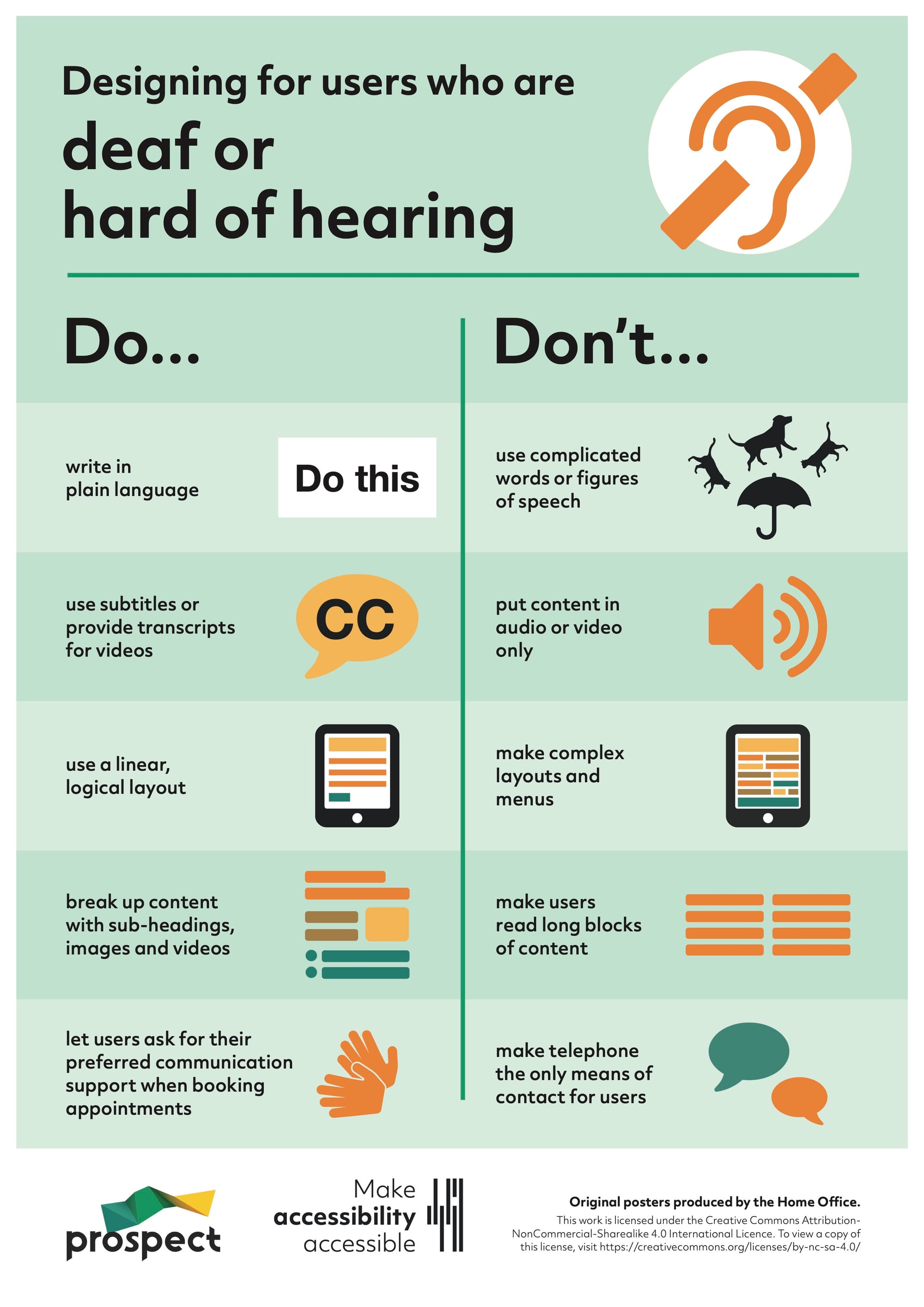
How To Design For (And With) Deaf People
This post on LinkedIn by Vitaly Friedman, editor-in-chief of Smashing Magazine, is not specifically about content, but it's full of useful, related information. This includes some statistics, infographics and a collection of simple, practical tips.
Improving content through journey mapping
I'm not sure how I hadn't read this before, but if you're looking for a handy guide to content journey mapping, this is for you.
When we start working on an end-to-end service, we define the users, then map out the journey. This process shows us what tasks users need to complete and highlights where the content doesn’t help them to do this.
What follows is pretty much a step-by-step to get you started. Of course, you'll need to take your organisation's specific circumstances and constraints into account. But hopefully it should be easy to get the right people together and start mapping those content journeys. Also, you can do all this at the start of a content project, not just when things already exist and are ready for an update.
Consider also reading this article from Content Design London on mapping and measuring content journeys to influence your organisation.
Common misconceptions about screen readers
You might already know these screen reader misconceptions. Or you might learn something new about how they work and who uses them.
Probably the biggest misconception around screen readers is that they are only used by people who are blind. This is far from reality. WebAIM's latest Screen Reader User Survey shows that only 77% of respondents identified as being blind.
"Accessibility never happens by accident. There must be a deliberate effort to make products and services more accessible. It doesn’t have to be challenging if it’s considered early. No digital product is neutral. Accessibility is a deliberate decision, and a commitment. Not only does it help everyone; it also shows what a company believes in and values."
Vitaly Friedman
Join the club
Join a growing community of 950+ plain language champs and start getting advice and resources that help you write clearer, more accessible content.
Comments