Skip to Content

Clear Language Club

Posts on page 6

19. Everything is different Newsletter

Why you should avoid PDFs, effective letter writing, a book-making tool and the reality of being a content designer.

It's been a while, so you might be surprised to find that here's another edition of Plain English recently-not-so Weekly, sent to you by me, Iain Broome.

Needless to say, I have been busy. I'm currently in the middle of some of the most challenging, rewarding work of my entire career. And I can't even say what it is! But it's meant putting the newsletter on pause for a while.

We're back now though and the plan is to pick up a regular publishing schedule again. Starting today with this very missive.

Don't forget, if you have something you think your fellow clear language enthusiasts would like to read, watch or listen to, do let me know.

That's it. Enjoy the links.

Iain


Content design: what they don't tell you in the books

This is a 25-minute talk by Liberty Howard, Head of Content Design at consultancy, TPXimpact.

As it happens, I've worked as a freelancer with TPXimpact (starting when part of it was called Futuregov) for more than six years and can confirm that the very best way to learn about being a content designer is through actually doing.

Every project is different. All teams are different. The problems you are trying to solve are indeed different too. Everything is different! And that means you need to be pragmatic and adapt the stuff you learn through reading to whatever situation you find in front of you.


Why you should avoid PDFs and what to do if you can't

I'm sure you have either been told or find yourself telling other people that you should avoid PDFs at all costs. But can you always remember the reasons why that might be a good idea?

Enter this page in the NHS service manual, which says:

Creating a new PDF document is a last resort and you should avoid it unless there is a specific user need for it. You should always provide an HTML version too.

Not only can you use this page to bolster your no-PDFs argument, it also includes examples of when you might really need to use a PDF and, if so, how to do it in the best possible way.


Writing effective letters

I wrote a letter this week! Well, a prototype letter. A letter that could form part of a pretty complex service that I'm currently working on. And you won't be surprised to hear that the UK government's service manual has some good guidance here on how to write good letters. I will also point you to this shorter piece about designing letters as part of the whole user journey.


Writebook: write and publish a book online (for free)

Writebook is a brand new service from 37 Signals, the folks that make Basecamp, Fireside and other software products:

Blogging and posting on social is easy. But why is it so hard to publish a whole book on the web? It’s not anymore. Writebook is remarkably simple software that allows you to publish text and pictures in a simple, browsable online book format.

I share this with you because it seems to me a pretty interesting way to publish your organisation's style guidelines. Or your team manual. Or anything else at all, really.
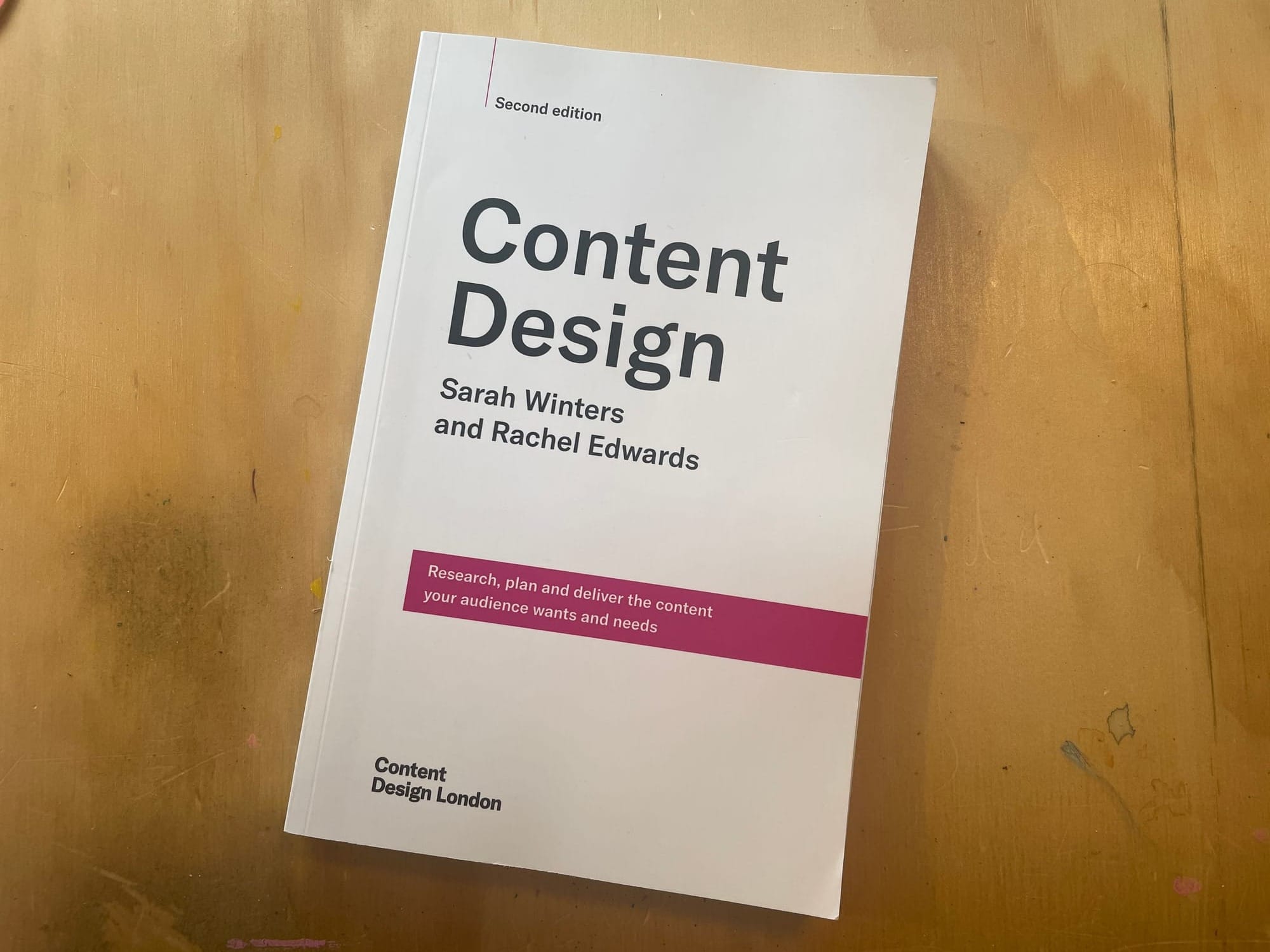

The second edition of Content Design by Sarah Winters and Rachel Edwards

If you call yourself a content designer, you will be aware of this book. It's not an overstatement to say that it has been the foundation for a great many careers in the world of content design. I can't recommend it highly enough.

The first edition by Sarah Winters was ace, but this updated version is even better and co-written with Rachel Edwards. It includes lots of small updates and a whole new chapter on journey mapping, which is just as brill as the rest of it.

Full disclosure: Rachel kindly sent me a preview copy and I am just very late sharing it with anyone. Fullest disclosure, I would have happily ponied up and bought a copy anyway because it's essential reading for the work I do.


"This is the crux of all content strategy and content design. If you don't know what actually starts a journey, you could be missing your audience."
Winters and Edwards, Content Design

New reader?

Join a growing community of 600+ plain language champs and start getting advice and resources that help you write clearer, more accessible content.
18. Job-related showing off Newsletter

How content and product design work together, ways to tighten a sentence, plain English writing tips, and a handy readability tool.

Hello there

Please accept and enjoy this latest edition of Plain English Weekly, sent to you and 600+ other folk with much affection by me, Iain Broome.

Before Christmas, lots of you completed a one-question survey that asked what kind of content you might like to see beyond the newsletter. The idea of a bookmarks directory proved popular and I am writing this sentence to tell you that work on such a thing has begun. And it will be ace.

Now, this week's links.

Iain


Word to the words - a content and product design love story

Figma is the design tool of choice for most teams these days.

As a content designer, I find myself in Figma regularly and some content folk will use it every single day. Which is why it is rather odd that Figma's upcoming Config conference apparently features no talks by a content designer. Surely an oversight! A mistake! A wrong that must be righted in 2025!

The good news is that you can go back and watch this excellent talk from last year by Candi Williams, Director of Content Design at Bumble.


How to tighten a sentence: 3 easy ways to improve readability

I'm sure you know the three ways listed here (they're easy!), but I always like it when things are explained with an example. And the thing I like about examples, is that you can always have a play and come up with your own way of making a sentence clearer.


Plain English writing, structure and design tips

A succinct but certainly handy page from the National Adult Literacy Agency. This bit is worth a mention:

If you must use a technical word because there is no plain alternative to it, define the term the first time you use it.

I've spent the last year and a bit becoming the UK's foremost* content designer who knows things about local planning. There is much technical language in this area and a whole load of content that could be clearer.

But there is a difference between technical language and jargon. The latter is usually business-speak, waffle or some basic job-related showing off. On the other hand, technical words and phrases are often meaningful and clear to a specific group of people.

So in my case, if the content includes technical planning language and the audience is people who happen to be planners, I'm on good ground. As long as I provide that definition on first mention, my content should be clear.

* This might actually be true at this point!


Readable

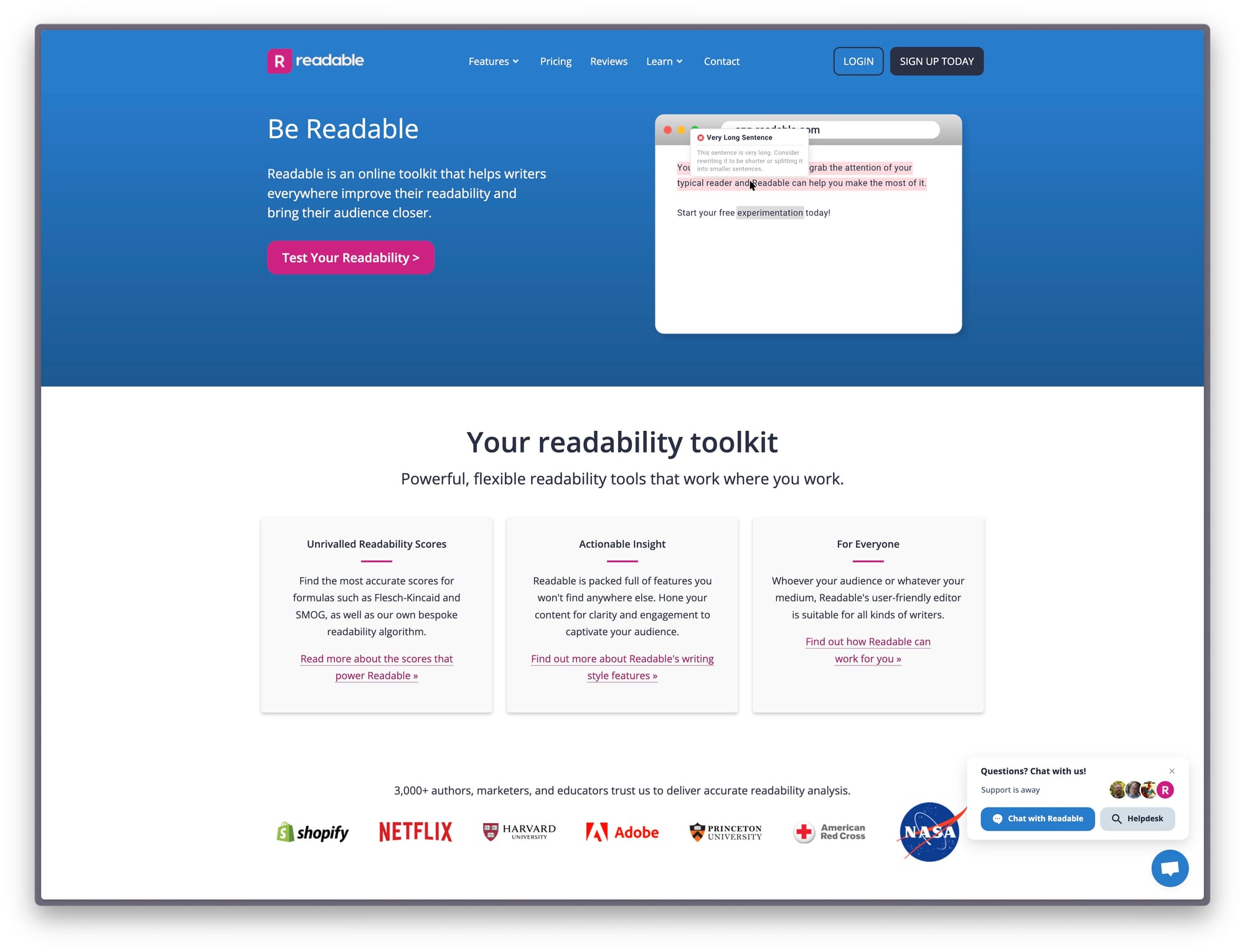
Did you know about this? Feel like maybe I used Readable at some point in the past and then forgot about it entirely. It's got some cool features, but the main news is that it can take your writing and score its 'readability' to help you make it much clearer.


"Long, complicated sentences take longer to read and longer to make sense of. They exhaust the eyeballs and overwhelm the brain."
Kim Scaravelli

New reader?

Join a growing community of almost 650 plain language champs and start getting advice and resources that help you write clearer, more accessible content.

17. Classic grammar basics Newsletter

Grammar essentials, user-focused information architecture, how to prioritise content, and some super plain English guidelines.

Hello there

You're not wrong, this is indeed another edition of Plain English Weekly, the newsletter for clear language lovers and the like.

Do you have an exciting blog post, video or some other piece of content you think your fellow 600+ other subscribers would enjoy? Please do share it with me! You can email iain@verymeta.com or here I am on LinkedIn.

Enjoy the lovely links below.

Iain


When to Use Semicolons, Colons, and Dashes

Some classic grammar basics for you to kick off with this week. To be honest, I generally avoid semi-colons. A full stop followed by a new sentence is often the clearest option. As for colons, if you're using one to make a list of three or more items, try popping those in a bulleted list instead.


Information architecture: keeping users in focus

Working on a new website structure? You won't go far wrong by following the information in this post by David McComb over on the Scroll blog.


York St John University's page on writing in plain English

I like it when an organisation publishes its guidelines on plain English and this is a good example of how to do it. York St John University's plain English page is concise, practical and comes with a few good examples. Lovely stuff.


Prioritisation for content teams: a guide

I'm coming to the end of a big piece of work* where we are about to build a prioritised content backlog for the next team to pick up. If you're in the same boat and need some tips, this is a fantastic starting point by Lauren Hope.

* oh hello, yes, funny you should ask, I am available for lead or senior content design contracts from May 👋


"Avoid writing sentences with lots of commas, or other punctuation such as dashes or semi colons. Instead, split your sentence down into several smaller ones which will be easier to understand."
York St John University brand guidelines

New reader?

Join a growing community of 600+ plain language champs and start getting advice and resources that help you write clearer, more accessible content.

16. The magic number Newsletter

Active and passive voice examples, designing with plain language, gender-inclusive writing techniques and writing for the web.

Hello there

Time for another edition of Plain English Weekly and a large, enthusiastic wave to all new subscribers. More than 600 of you now!

It's been an incredibly busy first quarter of 2024. I've just had a big ol' project come to an end and it went really well. Lovely feedback! Fingers crossed, I'll have a little more time to get the newsletter back on a regular schedule.

Speaking of which... enjoy the links below.

Iain


Active and passive voice examples (with added quizzes)

The British Council have a page packed with active and passive voice examples that you might find handy. This is typically the trickiest bit of getting good at writing in plain English, so the more examples to work from the better. They come with a few drag-and-drop quiz questions too. What a bonus!


Designing with plain language

Over on the Sensory Trust website, there is this page full of sensible advice on writing in plain language. I love that more and more organisations seem to be publishing this kind of guidance too.


9 Rules for Web Writing

This blog post from Dan Brotzel also contains plenty of advice that will help you write better content. Not entirely sure this bit about three being the magic number is a universal rule, but it does provide a nice structural constraint.

Three benefits. Three simple steps. Three sections to your speech. Whether at the level of an entire campaign or within the syntax of an individual sentence, three is structural gold.

Gender-inclusive writing techniques

Here, the Canadian government provides links to a range of articles to help you write gender-inclusive content. Actually, this whole page on inclusive language is full of advice and guidelines.


Clear language for legal, medical and financial content

You perhaps know about Readability Guidelines, a project to create a collaborative, universal style guide. Thought the website is no longer being updated, it still lives and you can mine it for all sorts of clear language goodies.

This section on legal, medical and financial content is great, but it also includes loads of links to other articles. If you work in these areas and want to persuade your bosses or colleagues that plain English is the way forward, you are sure to find something to help you.


"Online readers are time-poor scanners: anything that could trip up their processing of your words means a vital message could get missed. In print, ambiguity can spell playfulness and intrigue; online, it just gets in the way."
Dan Brotzel

New reader?

Join a growing community of 600+ plain language champs and start getting advice and resources that help you write clearer, more accessible content.

15. Word choices matter Newsletter

The basics of plain language, pair writing policy, rethinking the word vulnerable, and five plain English myths.

Hello there

Welcome to another belated edition of Plain English Weekly, your favourite collection of exciting clear-language links and other lovely bits and bobs.

I hope you can forgive the sporadic sending schedule so far this year. Whose idea was it to add a timeframe to the name of the newsletter? What a nit.

Enjoy the links below.

Iain

PS Hello to all new subscribers! You can read about what this newsletter is or, if you're interested, find out who the heck I think I am.


The basics of plain language

Some great stuff in the Australian government's style guide:

There are 4 basic elements of plain writing. If you consider these elements, you’ll be well on the way to writing in plain language. They are: structure, word choice, active voice, short sentences.

I really like the last section that explains why plain language benefits everyone. Always worth reminding yourself. And everyone else.


A team effort: pair writing guidance with policy experts

This is a good example of pair writing in action. And it just so happens that working with policy experts on guidance is exactly what I'm doing at the moment. It can be a little gnarly at times, but 'team effort' is exactly what's required.


Words that make me go hmmm: Vulnerable

This is excellent from Bryony Shannon:

I’m not suggesting that we stop talking about vulnerability. Far from it. But what I am calling for is an end to the discriminating and patronising use of the term. That we stop the lazy, blanket application without reason or context.

In short: word choices matter.


Real content design isn’t like the books

I don't think I've met any content designers who wouldn't agree with this. The principles of content design are great and we should apply them as much as possible. But work is messy. People are messy. And being able to adapt to a situation is a crucial skill for all designers.


Five myths about plain English

All good stuff from the folks at Write, a plain language agency (I think) based in New Zealand. Their blog is full of other nuggets too, so have a little explore while you're there.


Readers possibly won’t notice your writing style if you’ve done a good job. But they’ll definitely notice if what you’ve written is confusing or hard to read.
Eleanor Meecham, Write

New reader?

Join a growing community of 600+ plain language champs and start getting advice and resources that help you write clearer, more accessible content.

14. Set expectations Newsletter

Good survey questions, inclusive communications for teams, writing good AI prompts and a super accessibility tool.

Hello there

Another edition of Plain English Weekly here for you to peruse and enjoy. Please do forward this on or share it on social bits and bobs.

And if find or have written something you think might be a good fit for the newsletter, feel free to send it my way.

Iain

🎓
I run exciting plain English workshops with teams from all sorts of organisations. Email iain@verymeta.com if you'd like to know more about how they work.

Writing Good Survey Questions: 10 Best Practices

There is an art to writing good survey questions. The trick is to set expectations, make it clear what's being asked, and overall do no harm. The tips outlined here are full of practical things you can do to improve your own survey content.


Communicating inclusively beyond our products, services and users

I like this piece by Amy Hupe because I've now been through many onboarding processes as a freelancer and getting it right is hard.

How do you communicate as a team in a way that people feel able to ask questions and offer feedback? How do you know people in your organisation know what the heck everyone else is talking about?

From the post:

There’s lots of information out there on how to create inclusive content. But the vast majority that I see focuses on how we communicate within our products and services, and the need for inclusive communication goes beyond that.

Clear, inclusive communication within teams. Yes please.


This content design method can change the way your brain reads

The content design method in question here is – spoiler alert – plain language. The article is actually full of useful tips for writing in plain English, combined with some of the reasons why it is indeed very sensible to do so.


How to write great AI prompts for ChatGPT

I offer you this link with no comment on the merits or otherwise when it comes to using AI in your content work. But if you are starting to experiment and looking for ways it might work for you, these tips seem like a good starting point.


Who Can Use

Fascinating and potentially useful tool alert!

It's a tool that brings attention and understanding to how color contrast can affect different people with visual impairments.

Just enter two colours, one for text and one for the background, and Who Can Use shows you how people who have various conditions might actually view those colours on a screen. Could be very helpful when making decisions around accessible, inclusive content.


"Research shows that higher literacy people prefer plain English because it allows them to understand the information as quickly as possible. In fact, the more educated the person and the more specialist their knowledge, the greater the preference for plain language."
Hannah Collins

New reader?

Join a growing community of 550+ plain language champs and start getting advice and resources that help you write clearer, more accessible content.